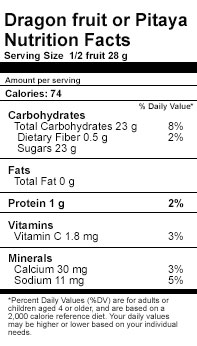
Nutrition – dragonfruit
Out of this world look and nutritional punch
- Low in what you don’t want. High in what you need.
Low in calories but that wild looking fruit packs a wallop of essential vitamins and minerals. That and a substantial amount of dietary fiber.
Dragon fruit also supplies beneficial plant compounds like polyphenols, carotenoids and betacyanins. - Helps fight inflammation
Dragonfruit is antioxidant-rich. Antioxidants can neutralize free radicals, helping to prevent cell damage and inflammation. Antioxidants have been shown to work best when eaten naturally in food (rather than a supplement). Dragonfruit’s antioxidants include:
– Vitamin C
– Betalains, beta-carotene, lycopene
– Carotenoids - Loaded with Fiber
Dragonfruit is an excellent choice for meeting your daily fiber needs.
- Bacteria can be good for you
Dragonfruit contains prebiotics, a specific type of fiber, that can potentially improve the balance of good bacteria in your gut - Helps fight infection
That vitamin C and carotenoids mentioned above may boost your immune system by working to protect white blood cells. - Iron levels can be given a boost
Iron in a fruit? Unusual but dragonfruit has it.
Iron helps transport oxygen throughout your body while also working to break food down into energy. - Magnesium too!
Dragonfruit has more than most fruit. A small amount but this mineral plays an important role in how your body functions.